March 27, 2026
Trail Running Injuries Edmonton: Stay Safe on Trails
Key Takeaways
-
Trail running increases injury risk because of the uneven terrain and frequent changes in foot placement, even for more experienced runners. Practice stability and adjust stride mechanics for rocky, steep, and slippery terrain.
-
Biomechanical stress on our joints and tendons increases on trails and can cause overuse injuries like shin splints, Achilles issues, and knee pain. Monitor form shifts from road to trail and plan gait analysis to minimize stress.
-
Training mistakes like rapid mileage spikes and missed recovery weeks are frequent injury culprits. Advance slowly, cross train, and schedule deload weeks to control cumulative fatigue.
-
Good gear limits both acute injuries and fatigue on technical terrain. Select trail shoes with traction and rock protection, moisture-wicking socks and guards, and swap them out on a schedule.
-
Proactive strength, mobility and proprioception work makes us more resilient and balanced on trails. Include weekly calf, hip and core training and ankle mobility and balance drills to support stable movement.
-
Get help sooner if pain changes your stride, doesn’t improve within 48 to 72 hours, or prevents you from going about your daily activities. Record symptoms, training load, and surfaces. Seek a structured rehab plan before returning to intensity.
Trail running injuries are frequent over uneven terrain and extend from ankle sprains and Achilles inflammation to knee problems and stress fractures. They increase with steep ascents, rapid descents, and loose rock, with falls and ankle sprains as common instigators. Overuse enters through abrupt spikes in weekly mileage, shoddy sleep, or fragile hips and calves. Shoe choice, tread grip, and midsole wear affect impact and traction, with wet roots and heat or cold stress compounding risk. Early warning signs are sharp ankle pain, swelling, morning heel stiffness, or knee pain on the downhills. To reduce danger, increase volume incrementally, incorporate strength training, and carefully design routes. The below sections discuss causes, symptoms, treatment, and return to run protocol.
Why Trail Running Injuries Happen
The injury risk increases since trails require fast balance changes, frequent pace variations, and accurate stepping on loose, sloped, or wet terrain. Both new and veteran runners encounter elevated stresses on stabilizing muscles and joints compared to roads. Results are a blend of terrain, biomechanics, training decisions, and individual background.
1. Unpredictable Terrain
Uneven ground, roots, rocks, and steep grades increase your chances of acute injuries, particularly ankle sprains and toe stubs. Every step lands at a new degree, so the foot and lower leg muscles work harder to maintain balance, which over time can flare Achilles tendinopathy or iliotibial band syndrome. Technical features, such as switchbacks, off-camber slopes, and scree, demand on-the-fly changes in stride length and foot placement, challenging stability with every step.
When pace is elevated or eyesight is obscured by brush, slips, trips, and falls become more probable. Fatigue compounds this danger because reaction time decelerates and foot lift diminishes.
Make a quick list of local Edmonton trails by grade and surface: gravel river valley paths, rooty singletrack, rocky ravines. Identify hazards such as steep descents or narrow bridges to schedule pace and traction requirements.
2. Biomechanical Stress
Constant loading on uneven terrain stresses ankles, knees, hips, and the tiny stabilizers of the foot. These include overuse injuries like shin splints, patellofemoral pain, plantar fasciitis, and Achilles tendinopathies.
Road-hardened form may break on trails. Overstriding on descents, stiff hips on cambers, or heavy heel strike on rocks can all spike tissue stress. Monitor variations during a transition from road to trail with video, cadence sampling, and stride observations after climbs, descents, and off-camber terrain.
3. Training Errors
Big jumps in any of these metrics – weekly distance, vertical gain, or speed – often precede injury. Insufficient training disregards progressive load and adaptation.
Structured blocks with step-ups of no more than 10 to 15 percent and planned down weeks lower risk. Lack of recovery or piling hard sessions back to back without rest invites breakdown.
A table illustrating safe versus risky keeps the choices nice and clear.
4. Improper Gear
Worn lugs, soft midsoles, or thin uppers reduce grip and ankle support on wet rock or mud. Rock plates and toe guards protect against sharp stones in shoes, while shin guards assist in brushy, rocky areas. A shoe drop that is too low (0–4 mm) can overload the Achilles if you are not adapted. Check tread, midsole compression, and upper rips. Replace when lugs flatten or cushioning feels dead.
5. Individual Factors
Your own biomechanics, say overpronation or supination, channel stress to the shin or IT band. Previous problems, such as tendonitis and stress fractures, re-surface under trail load.
Females and older athletes might require additional attention to hip strength, iron or energy availability, and bone health. Limited muscle recruitment variety or weak lower legs and core increase chances of Achilles pain or plantar fasciitis. Self-check your ankle mobility, hip rotation, single-leg strength, and balance, and set a targeted prevention plan.
Common Trail Running Injuries
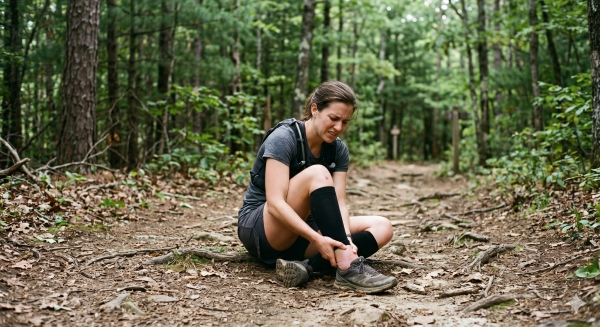
Trail running combines uneven terrain, ascents, and descents. Both acute and chronic injuries are common, caused by sudden slips and steady load on the lower limbs. Compared with road running, trails introduce surface irregularities that twist the foot at weird angles and redistribute load unexpectedly. As a result, ankles and knees absorb more stress, while roads tend to stress the hip and hamstring from consistent, repetitive strain.
|
Injury type |
What it is |
Typical signs |
Why trail risk is higher |
Simple prevention tips |
|---|---|---|---|---|
|
Ankle sprain |
Ligament stretch/tear |
Sharp pain, swelling; early sign can burn along plantar fascia |
Uneven surfaces twist the ankle |
Strengthen ankles, use stable shoes, watch foot placement |
|
Muscle strain/tear |
Fiber damage |
Sudden pull, bruising, weakness |
Steep climbs, jumps, slips |
Progressive strength work, warm-up, avoid big spikes |
|
Contusion |
Direct blow bruise |
Tender spot, discolor |
Falls, rocks, roots |
Careful footwork, poles on steep or loose ground |
|
Shin splints |
Tibial stress |
Sore front/inside shin |
Frequent braking downhill |
Shorten stride, gradual load, cushioned shoes |
|
Achilles tendinopathy |
Tendon overload |
Morning stiffness, calf/Achilles tight |
Downhills load tendon hard |
Eccentric calf work, cadence up, avoid sudden hill volume |
|
Patellofemoral pain |
Front knee pain |
Pain with stairs/downhills |
Braking forces on descents |
Hip/glute strength, soft landings, pace control |
|
IT band issues |
Outer knee/hip pain |
Ache with downhill runs |
Side-to-side balance shifts |
Lateral hip strength, vary terrain, avoid cambered edges |
Acute Injuries
Acute injuries are the result of a single incident, such as a fall, misstep on a rutted path or rock strike. Ankle sprains, muscle tears, and contusions top the list in trail runners as footing can vary within one to two steps, transferring load rapidly from one structure to another.
They require immediate attention since waiting can cause the joint to swell, obscure the injury, and disrupt a training cycle. Carry a small kit: elastic wrap, sterile pads, tape, and a space blanket.
Learn basic first aid: stop and assess, control bleeding, compress and elevate for sprains, and avoid forced stretches after a tear. If pain, swelling, numbness, or clear weakness persists, seek a medical check.
Overuse Injuries
Overuse injuries develop from cumulative stress with inadequate recovery. Shin splints, Achilles tendinopathy, and patellofemoral pain are common in trail running, where long descents increase braking forces at the knee and stress the Achilles.
Cumulative fatigue and training errors propel most. Rapid volume jumps, brand new shoes that you just had to have without a break in, or stacking hilly days are common triggers.
Decrease risk by cross-training and active recovery. Supplement with resistance training two to three times per week to build calves, quads, hips, and core. Follow up your long runs with active recovery by walking, riding an easy bike, or doing light mobility exercises to reduce stiffness and enhance circulation. If you have persistent foot, ankle, or shin soreness, pain on the inside or outside of the knee, or lingering calf tightness, it’s time to adjust load and consider a professional review.
The Biomechanics of Trail Running
Trail running alters the way your body loads, pushes and balances due to terrain variability with every step. Biomechanics is the intersection of physics and physiology to get a better sense of why we move the way that we do, says Dr. Alena Graboski, an Associate Professor of Biomechanics. Our bodies are systems in motion, which means any minor alteration in foot strike, slope or surface can transfer stress to the ankle, knee, hip or spine. Relative to road running, trails require faster ground reactions, lateral control and fluctuating cadence. This is why poor running form can be a huge cause of inefficient running or risk of injury. The optimal style is largely personal — there’s no predicting what the optimal biomedical style is for any given individual.
Gait Mechanics
Trail running requires adaptive gait mechanics to navigate rocks, roots, and ruts. Shorter steps, midfoot striking on downhills, and a slight forward lean all keep the center of mass over the feet. We found that on climbs, a lot of runners actually cadence up and minimize push-off time to reduce shear on the Achilles.
Incorrect gait can increase joint loading, particularly valgus collapse at the knee, overstriding on descents, or a rigid trunk on cambered routes. All of these factors increase the risk for IT band pain, patellofemoral stress, or tibial bone stress.
Routine gait analysis, which includes video from several angles on trail and treadmill, keeps tabs on warning signs such as crossover steps or hip drop. Another obstacle to evaluating form on the trail is the fact that the surface is not continuously consistent, so use portable video or short trail segments repeated to compare. If road running is becoming too intimidating and your form still requires work, taking a few minutes to lie on a soft, flat surface following a training run will do wonders. Record variations in stride length, cadence (steps per minute), and foot placement when transitioning to mud, rock, or sand.
Muscular Imbalances
Weak calves, glutes, or deep hip rotators reveal themselves on steep climbs, quick descents, or side-sloped tracks and frequently manifest as Achilles pain, plantar woes, or knee drift.
Weekly strength sessions count. Utilize calf raises, split squats, deadlifts, hip abduction and step-downs, two to three sets, two to three days per week. Simmons adds that one day a week of practicing does not do it. It has to be something an athlete is willing to be present and persistent with, ideally during the off-season.
Imbalances cause compensations such as toe-out gait or trunk lean that shift load to the lumbar spine or medial knee. Use strength testing, including single-leg heel raise counts, hop distance symmetry, and isometric hip abduction holds, to identify your weak links early.
Proprioceptive Demands
Trails demand more from ankle and leg sensors to maintain balance on loose rock and wet roots. Lack of proprioception increases the likelihood of ankle sprains and trips on technical terrain.
Complement with ankle mobility drills (rocker stretches, calf mobility) and balance work (single-leg stance, eyes-closed holds, wobble board). Enhance foot speed with ladder moves, cone weaves, and quick-tap drills. Lewis suggests enhancing foot speed with agility drills. Incorporate 10 to 15 minutes, 2 to 3 times a week, all year round, not just post-injury.
How to Prevent Trail Running Injuries

Injury prevention is a mixture of foresight, craft, and caution. A practical program rests on three pillars: balanced training, adequate recovery, and body awareness. Handle both acute risks from falls or twists and overuse risks from load spikes. A simple checklist helps: warm up for 10 minutes with an easy jog, joint mobility, and a few strides. Wear trail shoes suited to the terrain. Track weekly load. Rotate cross-training. Strength train two times per week. Focus on mobility three times per week. Schedule a recovery week every 3 to 5 weeks. Monitor sleep, soreness, and mood. Hydrate and fuel.
Smart Training
Increase volume and intensity gradually. Most runners fare fine with a 5 to 10 percent weekly load increase and a recovery week every 3 to 5 weeks. Insufficient recovery or too many hard sessions in a row increases injury risk.
Alternate trail runs with cycling, swimming, or rowing to disperse stress. A mix of running, strength, mobility, and recovery encourages balanced tissue adaptation. A basic template for each training entry contains distance in kilometers, elevation in meters, session type, rate of perceived exertion, and notes on fatigue or niggles.
Watch for red flags: soreness that lingers over 48 hours, sleep dips, heavy legs on easy days, rising resting heart rate. When they appear, reduce load, introduce rest, or shift to non-impact work.
Proper Technique
Smooth downhill running: lean slightly forward, take quick steps, keep eyes scanning 2 to 5 meters in front. Practice descents on safe trails when the stakes are low to develop fluidity before hitting technical terrain. On climbs, maintain upright posture, shorten your stride, and pump your arms for cadence.
Drills on mixed grades teach foot placement: land under your center, adjust cadence to surface, and avoid overstriding. A coach or movement specialist can polish form, minimize braking, and assist with pole usage.
Employ video from the side and rear to identify problems such as hip drop, crossover step, or heel strike on steep downs, and recheck after drills.
Correct Equipment
Shoes with lugs that correspond to local terrain and a rock guard for sharp stones, and sufficient support and cushion for your weight and speed. Switch them out when the outsole is slick or the midsole feels dead. Most pairs go for around 600 to 800 kilometers.
Add moisture-wicking socks, a light ankle wrap for those who sprain, and optional shin guards on brushy routes. Keep a gear checklist that includes shoes, socks, hydration, layers, a headlamp if low light, and a small first-aid kit.
Body Maintenance
Warm up before each run: 5 to 8 minutes of easy jog, ankle and hip mobility, then 3 to 4 progressive strides. Afterward, do static stretches for quads, calves, and hip flexors. Strength training two times weekly, including calf raises, deadlifts, split squats, leg lifts, and core exercises, supports joints and tendons.
Add mobility and diaphragmatic breathing to reduce tension and increase control. Wet and keep daily habits steady.
If pain alters your running pattern, back off. Utilize physical therapy guided drills for continued prevention and return to run programs.
The Role of Nutrition and Hydration

Nutrition and hydration play a critical role in shaping your endurance, recovery, and injury risk on the trails. The goal is consistent energy, even hydration, and better recovery, which increase running efficiency and decrease tissue stress.
Fueling Performance
Balanced meals and snacks keep you up even on tough ascents. Eat low-fiber carbs, lean protein, and some fat 2 to 4 hours before runs longer than 60 minutes. After, replenish glycogen with carbs and include protein for repair. For runs shorter than 60 minutes, a quick carb snack can suffice.
Carbohydrates fuel extended effort, so try to consume 30 to 60 grams per hour for up to 3 to 4 hours, and up to 90 grams per hour in glucose-fructose combinations, as the gut can absorb only around 60 grams per hour of glucose alone. Protein sustains muscle strength, with findings backing 1.8 to 2.7 grams per kilogram per day depending on muscle mass. Make room for quality fats because they keep you full longer and help your joints, but go moderate near hard efforts.
For long races and ultras, use portable options: gels, chews, bananas, rice balls, soft-flask mixes, and small wraps. Most stomachs max out around 300 kcal per hour. Well-trained athletes can surpass 300 kcal per hour on grueling, long efforts, but trial in training.
About nutrition and hydration
Note calories and fluids on a daily basis. Sip roughly 200 ml every 15 to 20 minutes, with adjustments for heat, altitude, and sweat rate. Around 450 ml per hour can be a sweet spot in cool weather.
Aiding Recovery
Post-run nutrition reduces soreness and accelerates repair by replenishing glycogen and increasing muscle protein synthesis.
Consume 20 to 40 grams of protein within 30 minutes of hard or long runs, along with carbohydrates and fluids. Protein supplements can provide the necessary quality and quantity while controlling calories.
Active recovery, including easy walks, light spins, and mobility work, enhances blood circulation. Combine it with passive techniques like sleep, light compression, or brief cold exposure when tolerated.
Construct a recovery meal plan based on your training load, overall protein goal of 1.8 to 2.7 grams per kilogram, and weekly volume.
Managing Inflammation
Add anti-inflammatory foods: berries, citrus, leafy greens, tomatoes, turmeric, ginger, olive oil, and omega-3 fish.
Hydration aids in clearing metabolic waste and may blunt inflammation. On runs, sip 200 ml every 15 to 20 minutes and rehydrate with electrolyte-containing drinks after.
Avoid processed foods, added sugar, and alcohol, which can increase inflammation and delay healing.
Record symptoms—swelling, morning stiffness, GI distress—together with diet and run information to identify valuable trends.
When to Seek Professional Help
Runners should consult experts when pain, swelling, or movement limits persist beyond self-care or after any fall or ankle sprain. Early intervention at Edmonton Foot Clinic can stop a small issue like micro-trauma or early inflammation from turning into a long layoff. The clinic offers sports medicine consults, gait analysis, and musculoskeletal assessments tailored for trail demands, with plans that reduce relapse risk.
Early Warning Signs
-
Pain that flares up during or after runs, or sticks around the next day.
-
Stiffness >24 hours, limping, or joint weakness
-
Swelling, warmth, and acute or localized pain at a bone or tendon.
-
Numbness, pins-and-needles, or foot/toe weakness
-
New blisters or callus patterns that change foot strike
-
Drop in pace or stride symmetry without training reason
-
Pain that doesn’t improve in a few days or worsens
Follow splits, cadence, and stride notes post-run. A sudden pace fade, shorter stride, or hip drop can signal a developing problem. Don’t bulldoze through “minor” aches in workouts. STOP, rest, ice, and reevaluate.
Log symptoms, shoe mileage, terrain, and load changes. Take this log to a sports medicine clinician for a quicker, more precise diagnosis.
Diagnostic Process
At Edmonton Foot Clinic, clinicians begin with history (training load, terrain, shoes, prior injuries) and then a targeted exam of the foot, ankle, knee, hip, and spine. They watch walking and running form, checking for asymmetry and compensation.
Tools can include high-speed video gait, pressure mapping, ultrasound for tendons, and functional strength and mobility tests. Proper diagnosis guides treatment and avoids re-injury on technical trails.
|
Step |
Focus |
Examples |
|---|---|---|
|
History |
Load/errors |
Sudden vertical gain, new shoes |
|
Exam |
Tissues/joints |
Tendon palpation, lig tests |
|
Gait |
Mechanics |
Overstride, hip drop |
|
Imaging |
Structure |
Ultrasound for tendinopathy |
|
Plan |
Risk control |
Load fix, footwear, drills |
Treatment Options
Care spans rest days and ice to guided physical therapy, incremental strength, and run-walk comebacks. All plans are personalized by type of injury, pain, and goals, using science-backed techniques such as tendon loading, balance exercises, and incremental plyometrics. Expect a clear timeline with milestones: pain under control in days, function gains in weeks, and return to full trail load in staged phases. Sustained, worsening, or post-severe trauma pain requires immediate professional review.
Rehabilitation Path
Rehab transitions from calm-down (anti-inflammatory, light range) to rebuild (strength and mobility), then return-to-run (impact drills, graded terrain), and finally performance (speed, hills, race work).
Go slow. Reintroduce volume and vertical in small increments while monitoring for the return of pain or stiffness in 24 hours.
Strength tests, ankle and hip mobility, and simple flexibility keep progress honest. Use a checklist: pain less than or equal to 2 out of 10 with run-walk, no limp, next-day stiffness less than 24 hours, single-leg calf raises matched side to side, stable hop test, and steady form on downhill.
Conclusion
Trail runs are a test for body and mind. The terrain moves. The grade rises. The tempo dies down to a lull. Little bits of distraction accumulate. Smart prep reduces the risk.
Establish consistent habits. Record runs on easy, soft trails. Add some short hill drills. Supplement with single-leg work such as step downs and calf raises. Inspect shoes for grip and fit. Eat simple carbs pre-run. Sip water frequently. Sprinkle salt on hot days. Monitor sleep, mood, and aches in a quick note.
Listen to obvious indicators. Sharp pain, swelling, or a limp requires a pro check. Short rest trumps long layoffs.
To begin, choose a single tweak for this week. For instance, include two sets of calf raises following your next run. Take it easy. Make it real.
Frequently Asked Questions
What are the most common trail running injuries?
Ankle sprains are common, as are IT band syndrome, Achilles tendinopathy, plantar fasciitis, shin splints, and knee pain. They are caused by uneven terrain, sudden loads, weak stabilizers, and bad shoes. Early rest and targeted rehab help prevent chronic problems.
Why do trail running injuries happen more than road running injuries?
Trails require you to constantly shift your balance and make rapid course corrections. Uneven surfaces, descents, and obstacles amp up joint stress and muscle fatigue. Weakness, technique, and old shoes increase danger. Sudden jumps in distance or elevation overload tissues.
How can I prevent ankle sprains on trails?
Enhance proprioception with balance exercises. Build up calves and peroneals. Wear shoes with secure uppers and sufficient grip. Shrink your stride on technical terrain. Mind your footing and steer clear of those fatigue-riddled descents. Tape or brace if you have a sprain history.
What biomechanics matter most for safe trail running?
Stable hips and controlled knee tracking eliminate strain. A small forward lean, rapid cadence, and midfoot landing control impact. Use active arms to maintain balance. Built glutes and core shield joints on climbs and descents. Consistency trumps perfection.
How should I fuel and hydrate to reduce injury risk?
For trail running injuries, arrive hydrated. For runs longer than 60 to 90 minutes, target 30 to 60 grams of carbs per hour and electrolytes, particularly sodium. Take sips often. After your run, have a post-run recovery cocktail of carbs plus 20 to 30 grams of protein within 60 minutes. Steady fuel supports form, decision-making, and recovery.
When should I see a professional for trail running pain?
Search assistance if discomfort changes your stride, sticks around 7 to 10 days, aggravates with relaxation, or includes puffiness, imbalance, or tingling. Traumatic pops or serious ankle twists require immediate attention. A sports clinician can evaluate mechanics and direct rehab.
Do I need special shoes for trail running to prevent injuries?
Yes. Trail shoes provide superior traction, rock plate protection, and foot lockdown. Pair outsole to terrain and conditions. Of course, secure heel and midfoot. Trail running injuries change shoes every 500 to 800 kilometers. With the right fit and traction, they minimize slips and sliding or whipping of your foot.
Not what you were looking for? Browse Edmonton Foot Clinic’s top foot treatment services for expert diagnosis, prevention, and advanced care in Edmonton.
You can also explore these trusted resources for additional information on foot health care.