
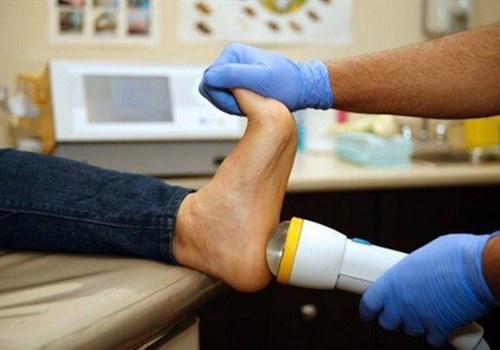
What is ESWT?
Shockwaves are essentially sound waves with a very specific wave form. Unlike radial pressure wave therapy, softwave™ therapy penetrates deep into the tissue and thus to the site of injury.
The biologic signaling effect of shockwave is much higher than both radial pressure waves and ultrasound and is therefore clinically much more effective.
Mechanism of Action
Shockwave elicit a strong cellular response. The sudden change in pressure caused by the shockwaves triggers the cell to respond as it would to trauma. In other words: shockwaves initiate a biologic healing response. Numerous studies show the release of growth factors, anti-inflammatory agents and an improved blood supply in response to ESWT.
Indications
- Chronic heel pain (plantar fasciitis)
- Tendon and ligament injuries
- Muscle Pain
- Stiff toe joint
Procedure
The procedure takes only 5 - 10 minutes. Much like an ultra-sound procedure, the treatment area will be covered with gel to ensure good shock-wave transmission. After coupling the therapy head to your body your therapist will deliver a diagnosis-specific number of pulses. The energy can be applied at your personal comfort level.
Not finding what you're looking for? Here are some of our most searched for podiatry services.
Additional Resources:
Foot Related Resources:
Step Ahead Podiatry Is Committed To Helping You Gain The Freedom To Walk Pain Free Again...
What is shockwave therapy used for in podiatry?
Shockwave therapy in podiatry is a non-invasive treatment that uses high-energy acoustic waves to stimulate healing in damaged soft tissues of the foot and ankle. It is most commonly used for chronic conditions such as plantar fasciitis, Achilles tendinopathy, heel pain, and some forms of tendon overuse injuries. The goal is to trigger the body’s natural repair response by increasing blood flow, breaking down scar tissue, and stimulating cellular regeneration. It is typically recommended when conservative treatments like rest, orthotics, and physiotherapy have not provided sufficient relief.
How does shockwave therapy treat plantar fasciitis?
Shockwave therapy treats plantar fasciitis by delivering focused acoustic energy to the inflamed or degenerative plantar fascia tissue near the heel. These shockwaves create controlled microtrauma, which stimulates increased blood flow and activates the body’s healing response. This helps repair micro-tears in the fascia and reduces chronic pain over time. Research shows it can improve symptoms in a significant portion of patients, especially those with long-standing heel pain that hasn’t responded to other treatments. It is often part of a broader rehabilitation plan including stretching and supportive footwear.
Is shockwave therapy painful during treatment?
Shockwave therapy is not usually described as severely painful, but most patients do feel some level of discomfort during the session. The sensation is often described as repetitive tapping or pressure against the affected area, especially where inflammation is present. Pain levels depend on the severity of the condition and individual sensitivity. In some cases, practitioners adjust intensity to improve comfort. After treatment, mild soreness, redness, or sensitivity in the treated area is common but typically temporary and resolves within a few days.
How many shockwave therapy sessions are needed?
Most patients require a series of shockwave therapy sessions rather than a single treatment. Typically, 3 to 6 sessions are recommended, spaced about one week apart, depending on the severity and chronicity of the condition. Chronic plantar fasciitis or tendon issues may require more sessions for optimal results. Improvement is often gradual rather than immediate, with many patients noticing reduced pain after a few treatments and continued improvement over several weeks as tissue healing progresses.
What conditions respond best to shockwave therapy?
Shockwave therapy works best for chronic musculoskeletal conditions involving tendons and soft tissue that have not healed with conservative care. The most responsive conditions include plantar fasciitis, Achilles tendinopathy, calcific tendonitis, and certain heel pain syndromes. It is particularly effective for long-term overuse injuries where blood supply is reduced and healing is delayed. It is less effective for acute injuries or structural deformities, where other treatments such as immobilization or surgery may be more appropriate.
How effective is shockwave therapy for heel pain?
Shockwave therapy is considered moderately to highly effective for chronic heel pain, especially plantar fasciitis that has persisted for several months or longer. Clinical studies and patient outcomes show that many individuals experience significant pain reduction and improved function after completing a treatment course. However, results can vary depending on severity, duration of symptoms, and adherence to complementary care like stretching and footwear changes. It is often used as a non-surgical option when other treatments have failed.
Can shockwave therapy help avoid foot surgery?
Yes, in many cases shockwave therapy can help patients avoid foot surgery by promoting natural healing and reducing chronic pain. It is commonly recommended when conservative treatments such as orthotics, physiotherapy, and medication have not been successful. By stimulating tissue repair and reducing inflammation, it may improve symptoms enough that surgery is no longer necessary. However, it is not guaranteed to replace surgery in all cases, especially when there is severe structural damage or advanced degeneration.
What happens during a shockwave therapy session?
During a shockwave therapy session, the podiatrist or clinician first identifies the exact painful area, often marking it for precision. A gel is applied to help transmit the acoustic waves, and a handheld device delivers controlled shockwaves to the targeted tissue. The treatment typically lasts 10–20 minutes per foot. Patients may feel tapping or pressure sensations during the procedure. No anesthesia is usually required, and patients can walk immediately afterward, though mild soreness may occur.
Are there side effects of shockwave therapy?
Shockwave therapy is generally safe, but some temporary side effects can occur. These may include mild pain during or after treatment, redness, swelling, bruising, or tenderness in the treated area. In rare cases, temporary numbness or tingling may also be reported. Serious complications are uncommon when performed by trained professionals. Most side effects resolve within a few days, and patients are usually able to resume normal activities shortly after treatment.
Is shockwave therapy safe for athletes and active individuals?
Yes, shockwave therapy is widely considered safe for athletes and active individuals when used appropriately. It is commonly used in sports medicine to treat overuse injuries such as plantar fasciitis and Achilles tendon issues. Because it is non-invasive, it allows athletes to avoid surgery and return to activity faster compared to more invasive treatments. However, recovery protocols may include temporary activity modification to allow tissues to heal effectively and prevent reinjury during the treatment phase.
Is shockwave therapy the same as SoftWave therapy?
Both shockwave therapy (ESWT) and SoftWave therapy belong to the family of acoustic wave technologies used in regenerative medicine. They deliver high-energy sound waves deep into damaged soft tissues to stimulate cellular metabolism, increase local blood flow, and break down chronic scar tissue adhesions. At Step Ahead Podiatry, our focused acoustic wave treatments are specifically calibrated to treat chronic foot and ankle conditions such as recalcitrant plantar fasciitis and insertional Achilles tendonitis without invasive needles or downtime.
Is shockwave therapy covered by private health insurance, and what does it cost?
While provincial healthcare (AHCIP) does not cover the cost of shockwave therapy, many third-party employee health insurance and extended health benefit plans provide partial or full coverage under podiatry services or physical therapies. Our administration team provides detailed, itemized receipts with standard diagnostic and clinical procedure codes following each session so you can submit your claim directly to your insurance provider. Contact our desk at 780.460.0025 to request a fee estimate before your appointment.
Where to Access Shockwave Therapy Across Greater Edmonton
Step Ahead Podiatry provides diagnostic foot assessments and shockwave therapy across our regional clinic network:
- Central Edmonton Foot Clinic: 11308 104 Ave NW (Unity Square / Oliver)
- South Edmonton Foot Clinic: Southwell Medical, Suite 101B – 1230 91 St SW
- Sherwood Park Foot Clinic: Tailor Made Building, #204, 85 Cranford Way
- St. Albert Foot Clinic: Erin Ridge Plaza, #460, 1115 St. Albert Trail
- West Edmonton Foot Clinic: Westend Callingwood Medical Clinic, #418 – 6655 178 St NW
Related Foot Conditions & Complementary Services
- Heel Pain & Plantar Fasciitis Guide: Diagnostic details, morning pain symptoms, and recovery strategies.
- Custom Prescription Orthotics: Biomechanical shoe inserts designed to offload plantar fascia tension and correct abnormal gait forces.
- Stiff Toe Joint (Hallux Rigidus): Non-surgical treatment options for big toe joint arthritis and stiffness.
- Morton's Neuroma Treatment: Conservative therapies and offloading for forefoot nerve compression.
- Podiatric Surgical Consultations: Evaluation pathways when chronic structural conditions require surgical consideration.
4. Final Booking CTA Block
Relieve Chronic Foot & Heel Pain Without Surgery
Call our central booking line at 780.460.0025 or book an Appointment Online to find out if shockwave therapy is the right clinical solution for your recovery.